




A comprehensive study by the Fraunhofer Institute reveals that Europe’s illicit disposable vape market is projected to reach €10.8 billion by 2030, significantly undermining the Tobacco Products Directive (TPD). Researchers warn that an "uncontrollable influx" of non-compliant products from China is exploiting gaps in customs enforcement, creating a parallel economy that fuels organized crime and youth nicotine dependency.
The €10 Billion "Irregular Market" Projection
A new research paper commissioned by strategy consultancy SKR and presented in Brussels highlights a systemic failure in Europe’s ability to regulate the booming disposable e-cigarette sector. According to the Fraunhofer Institute, a massive portion of the market now operates within an "irregular market"—a term describing products sold outside the legal framework of the EU Tobacco Products Directive (TPD).
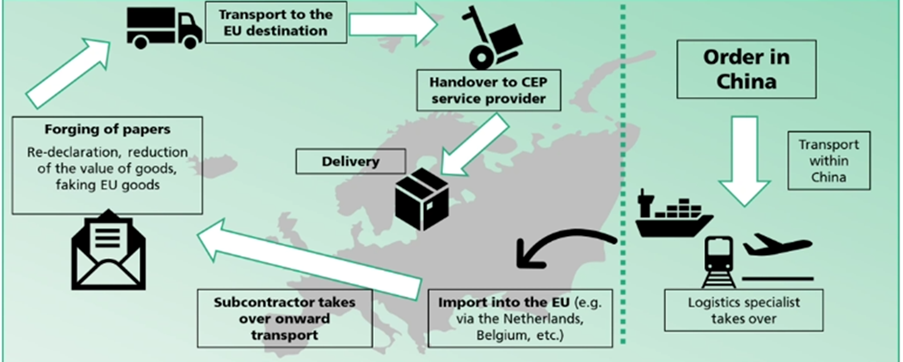
The financial implications are staggering. The illicit market was valued at €6.6 billion in 2026 and is on a trajectory to hit €10.8 billion by 2030. This growth exposes critical vulnerabilities in EU customs controls and tax enforcement. The following table illustrates the scale of the illicit nicotine trade and the logistics involved in its expansion.
| Market Metric | Data / Projection |
|---|---|
| Illicit Market Value (2026) | €6.6 Billion |
| Projected Illicit Market Value (2030) | €10.8 Billion |
| Parcels Sent from China to EU (2024) | ~800 Million |
| Daily Parcel Declarations (Belgium Customs) | Up to 4 Million |
| Illicit Cigarettes Consumed in France (2024) | 18.7 Billion (37.6% of total) |
Supply Chains and the "Uncontrollable Influx"
China remains the primary source of e-liquid and hardware imports for the European Union. The Fraunhofer study identifies complex maritime and rail routes as the primary delivery channels. In 2024 alone, approximately 30,000 containers per week arrived at major ports including Rotterdam, Antwerp, and Hamburg. Ireland and the Netherlands have emerged as the primary entry points, subsequently supplying the rest of the EU through cross-border trade.
The sheer volume of small-parcel trade has overwhelmed national authorities. In mid-July 2025, Belgium’s Central Economic Council (CCE) warned of an "uncontrollable influx" of parcels, with millions of individual packages arriving daily. This logistical surge makes it nearly impossible for customs agencies to verify if products comply with TPD safety standards.
Identifying TPD Regulatory Violations
The research found widespread evidence that a majority of disposable vapes currently available in European shops fail to meet statutory requirements. These violations are not merely administrative; they represent significant consumer safety risks. The most common infractions identified include:
- Tank Capacity: Exceeding the mandatory EU limit of 2ml of e-liquid.
- Nicotine Strength: Concentrations surpassing the legal cap of 20mg/ml.
- Health Warnings: Missing or incomplete labeling and safety information.
- Registration Failures: Neglecting to notify authorities through the EU’s formal product registration system.
Rico Bak, managing partner at SKR AG, noted that the research was initially prompted by reports of students as young as 12 to 15 years old vaping in schools. The use of bright colors and "sweet" flavors—such as candy and soft drinks—is a deliberate strategy to appeal to younger consumers, circumventing the intent of the TPD.
Regional Hubs: France, Belgium, and the Netherlands
The illicit vape market is expanding alongside established criminal networks for counterfeit tobacco. France currently holds the title for the largest illicit cigarette market in Europe. In 2024, more than one in three cigarettes smoked in France was illegal, driven by high retail prices of €11 to €13 per pack.
Belgium has transitioned from a transit hub to a major production center. Customs authorities dismantled 12 illegal factories in 2024 and another 10 in 2025. Interior Minister Bernard Quintin reported that organized crime groups are even recruiting workers through online ads, sometimes forcing them to work in hidden, sophisticated factories to meet the rising demand for cheap, untaxed nicotine products.
In the Netherlands, strict policies—including a ban on all flavors except tobacco and a ban on online sales—have inadvertently fueled the black market. Despite these restrictions, illegal flavored disposables remain widely available, imported directly from Asia. This has led to a surge in illicit cigarette consumption, which nearly doubled to 17.9% in a single year.
Enforcement and the EMPACT Programme
Law enforcement agencies are increasingly treating the nicotine black market as a pan-European criminal priority. Under the EU’s EMPACT programme, coordinated actions in 2023 led to the dismantling of 68 illegal cigarette factories and the discovery of 100 storage facilities. Total seizures reached 790 million illegal cigarettes, a quantity sufficient to supply 230,000 smokers for a full year.
| Enforcement Action (EMPACT 2023) | Quantity / Result |
|---|---|
| Illegal Factories Dismantled | 68 |
| Storage & Cutting Facilities Discovered | 100 |
| Illegal Cigarettes Seized | 790 Million |
Expert Verdict: The Enforcement Gap
The Fraunhofer study highlights a widening chasm between the European Union’s ambitious regulatory framework and the reality of its marketplace. While the Tobacco Products Directive was designed to protect public health, its effectiveness is being neutralized by a globalized supply chain that moves faster than national enforcement agencies. As the European Commission considers revisions to the TPD, the focus must shift from simply creating rules to ensuring customs synchronization and maritime security. Without a unified European response to the "uncontrollable influx" of Chinese parcels, the illicit market will continue to drain public coffers and jeopardize youth health at an unprecedented scale.

Vape Industry Content Creator | Product Reviewer | Harm Reduction Advocate
Alex Chen is a professional vape content creator with a strong focus on product education, industry trends, and harm reduction. With years of hands-on experience testing disposable vapes, pod systems, and e-liquids, Alex provides clear, unbiased insights to help adult consumers make informed decisions.